 ETECKSPACE
QUICK ANSWER
The short answer: HTCC and LTCC are not interchangeable high- and low-temperature versions
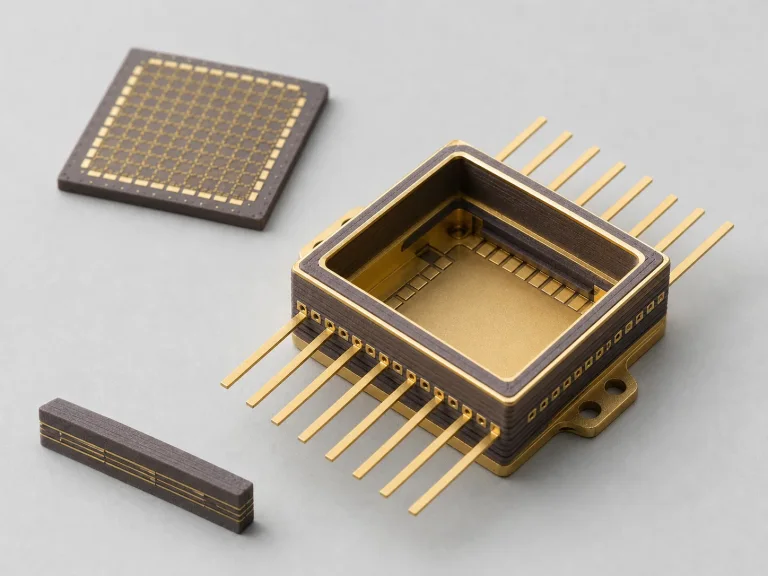
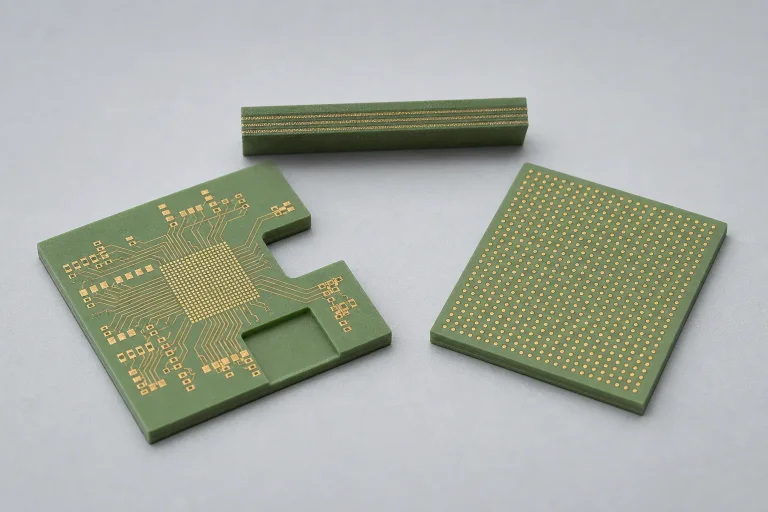
HTCC is commonly associated with alumina-based systems, high-temperature co-firing, hermetic packaging, and high-reliability structures. LTCC is commonly associated with glass-ceramic systems, lower-temperature co-firing, high-frequency performance, compact layouts, and multilayer functional integration. The final choice depends on dielectric needs, frequency, temperature, hermeticity, geometry, layers, metallization, and cost targets.
CORE DIFFERENCES
HTCC vs LTCC at a glance
This comparison supports early-stage evaluation. It does not replace a material data sheet, supplier process capability, or an approved engineering drawing.
| Comparison | HTCC ceramic technology | LTCC ceramic technology |
|---|---|---|
| Common material system | Typically alumina or another ceramic system suited to high-temperature co-firing | Typically a glass-ceramic system suited to lower-temperature co-firing |
| Design focus | High-reliability packaging, hermetic structures, heat resistance, and multilayer interconnection | High-frequency performance, compact layouts, multilayer routing, and passive integration |
| Common structures | Multilayer cavities, vias, metallization, pads, and lead structures | Multilayer traces, vias, cavities, pads, and integrable passive structures |
| Typical application direction | Hermetic packages, sensors, optoelectronics, MEMS, and high-reliability modules | RF front ends, filters, antennas, communications, sensors, and compact modules |
| Early quality focus | Cracks, chips, dimensions, tolerances, metallization, plating, continuity, and hermetic requirements | Dimensions, thickness, warpage, traces, vias, pads, surface finish, and high-frequency requirements |
| RFQ basis | 2D/3D drawing, material, layers, cavities, metallization, plating, quantity, and timing | Drawing or Gerber data, material, layers, traces, vias, frequency, quantity, and timing |
SELECTION PATH
How should an engineering or procurement team shortlist HTCC or LTCC?
Confirm these six groups of requirements before material and supply feasibility review.
Electrical and frequency
Define operating frequency, dielectric needs, loss targets, routing density, grounding, and shielding.
Thermal and environmental
Define temperature, thermal cycling, heat flow, humidity, corrosion, and long-term reliability conditions.
Package and hermeticity
Confirm cavities, hermetic sealing, brazing, leads, or other package interfaces.
Geometry and stack-up
Confirm outline, thickness, layers, vias, cavities, traces, and tolerance boundaries.
Surface and interconnection
Confirm metallization, plating, soldering, wire bonding, assembly, and downstream processing.
Volume and validation
Confirm sample volume, production demand, test method, acceptance criteria, and target timing.
FAQ
Common HTCC and LTCC selection questions
Is HTCC or LTCC better?
Neither is universally better. HTCC is often evaluated for high-reliability or hermetic packages. LTCC is often evaluated for high-frequency, compact, or functionally integrated designs. The selected material and process capability still determine feasibility.
Can evaluation start with only the product size and application?
That is enough for an initial direction, but a sourcing review normally needs a drawing or Gerber data, material or performance targets, layers, metallization, quantity, test requirements, and timing.
Can HTCC or LTCC directly replace an existing ceramic substrate?
A process name alone is not enough to confirm replacement. Material, electrical performance, thermal and mechanical conditions, dimensions, metallization, finish, assembly, and validation criteria must be compared.
Does ETECKSPACE list stocked HTCC or LTCC part numbers?
This website does not claim stocked inventory or fixed offered part numbers. We coordinate drawing-led technical review and sourcing based on specifications, samples, quantity, and target timing.
HTCC KNOWLEDGE CENTER
Shortlisted HTCC? Continue with the design and RFQ inputs
Open the HTCC engineering and sourcing guides for design inputs, metallization and plating, and the drawing-led RFQ checklist.