 ETECKSPACE
HTCC Ceramic Substrate Design Input Guide
Define the material, stack-up, cavities, vias, metallization, tolerances, interfaces, and validation inputs needed for an HTCC substrate or package review.
Read the guideHTCC ENGINEERING & SOURCING
From the structure of high-temperature co-fired ceramics to drawings, metallization, plating, and RFQ inputs, these guides help engineering and procurement teams turn an application into reviewable sourcing requirements.
CONTENT SCOPE
This knowledge center does not publish universal process limits or present common industry practices as a confirmed supplier capability. Trace, via, layer, tolerance, metallization, plating, and test ranges must be confirmed against the project drawing, material system, and written supplier feedback.
FOCUSED GUIDES
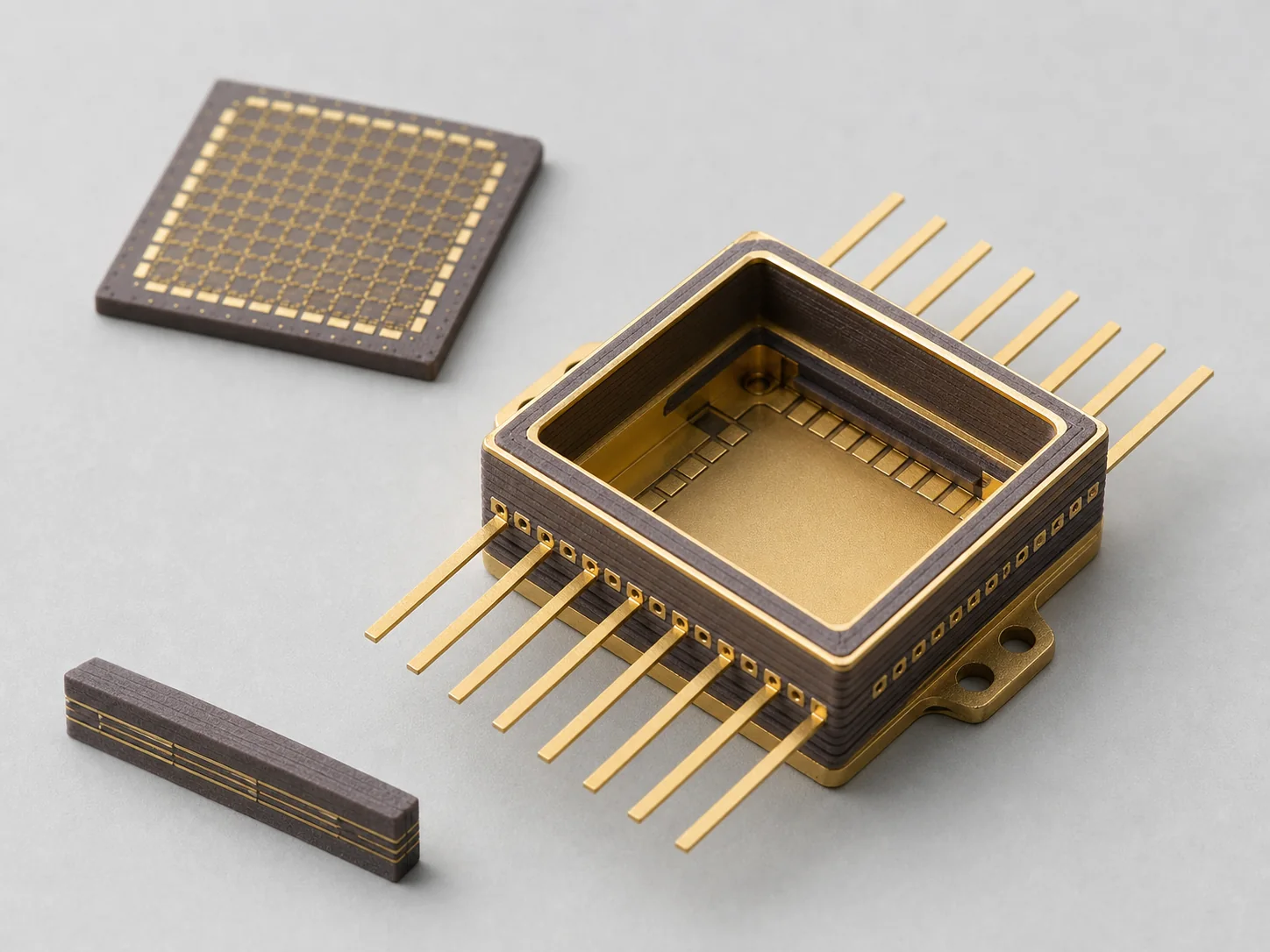
Define the material, stack-up, cavities, vias, metallization, tolerances, interfaces, and validation inputs needed for an HTCC substrate or package review.
Read the guideUnderstand the relationship between HTCC base metallization, surface plating, wire bonding, soldering, and brazing requirements before requesting a quote.
Read the guideA practical HTCC ceramic substrate and package RFQ checklist covering drawings, material, layers, dimensions, metallization, quantity, testing, and target timing.
Read the guideWORKING PATH
Assess whether HTCC fits the package, reliability, temperature, hermeticity, or multilayer interconnect direction.
Put material, stack-up, cavities, vias, metallization, dimensions, and interfaces into controlled drawings.
Connect plating requirements to wire bonding, soldering, brazing, sealing, or other downstream interfaces.
Submit controlled files, volume, testing, packaging, and timing for a feasibility review.
GLOSSARY